
With BC consistently ranking among the most expensive places in Canada to fuel a vehicle, many drivers are asking a practical question rather than an environmental one: do EVs save money compared to gas cars?
The short answer is yes. The longer answer, and the one that really matters, comes down to understanding the full electric car vs gas car cost over time. At Expert Electric, we work with EV owners every day, helping homeowners and businesses install safe, efficient charging solutions. We see firsthand how electric vehicles affect monthly budgets, long-term ownership costs, and daily convenience.
Let’s take a clear, honest look at where the savings actually come from, and why EVs make especially good financial sense in BC’s high fuel market.
Why Gas Cars Are So Expensive to Own in British Columbia
Before comparing EVs and gas vehicles, it helps to understand why gas cars hit BC wallets so hard.
BC’s fuel price reality
Gas prices in BC are influenced by several factors:
- Provincial fuel taxes and carbon taxes
- Federal carbon pricing
- Refinery limitations and supply constraints
- Seasonal fuel requirements
- Global oil market volatility
Even when prices dip briefly, they rarely stay low for long. For commuters in Vancouver, Burnaby, Surrey, Richmond, or Coquitlam, fuel expenses often feel like a second utility bill, one you can’t avoid.
The true gas car cost goes far beyond fuel
Fuel is just the beginning. Gas vehicles come with ongoing maintenance and repair expenses that quietly add up over time:
- Oil and filter changes
- Engine servicing
- Transmission maintenance
- Exhaust system repairs
- Spark plugs, belts, hoses, and emissions components
Gas engines are complex machines with hundreds of moving parts. Over years of driving, wear and tear is unavoidable, and rarely cheap.
Electric Car vs Gas Car Cost: Looking Beyond the Sticker Price
When comparing an electric car vs gas car cost, many people focus only on the purchase price. While that’s understandable, it doesn’t tell the full story.
Upfront costs vs long-term reality
Some EVs do carry a higher upfront price, although that gap has narrowed significantly in recent years. More importantly:
- Operating costs for EVs are much lower
- Maintenance costs are dramatically reduced
- Fuel price volatility is largely eliminated
When viewed over the life of the vehicle, EVs often come out ahead, especially in regions with high gas prices and relatively affordable electricity, like BC.
Total cost of ownership matters most
Total cost of ownership includes:
- Energy or fuel costs
- Maintenance and repairs
- Insurance
- Depreciation
- Charging infrastructure
When all these factors are considered, the financial advantages of EVs become much clearer

EV Charging Cost vs Gas Cost: The Monthly Difference That Adds Up
For most drivers, the biggest savings come from day-to-day driving costs.
What gas really costs per kilometre
A typical gas vehicle might consume 8–10 litres per 100 km. With fuel prices often well above $2.00 per litre, the cost per kilometre climbs quickly, especially for daily commuters.
Monthly fuel expenses of several hundred dollars are common in BC, particularly for drivers covering long distances or facing heavy traffic.
Understanding EV charging cost
EV charging cost depends on:
- Your electricity rate
- How often you charge
- Whether you charge at home or publicly
In most cases, charging at home is by far the most affordable option. Electricity rates in BC are relatively stable, which makes EV ownership easier to budget for than gas vehicles.
Instead of watching fuel prices fluctuate weekly, EV drivers enjoy predictable energy costs month after month.
Home Charging: Where the Real Savings Happen
Public charging is convenient, but home charging is where EV ownership becomes truly cost-effective.
Why home charging costs less
Charging at home allows you to:
- Avoid public charging premiums
- Take advantage of off-peak electricity rates
- Charge overnight while you sleep
It’s similar to making coffee at home instead of buying it every morning, same result, much lower cost.
Level 2 chargers: efficient and practical
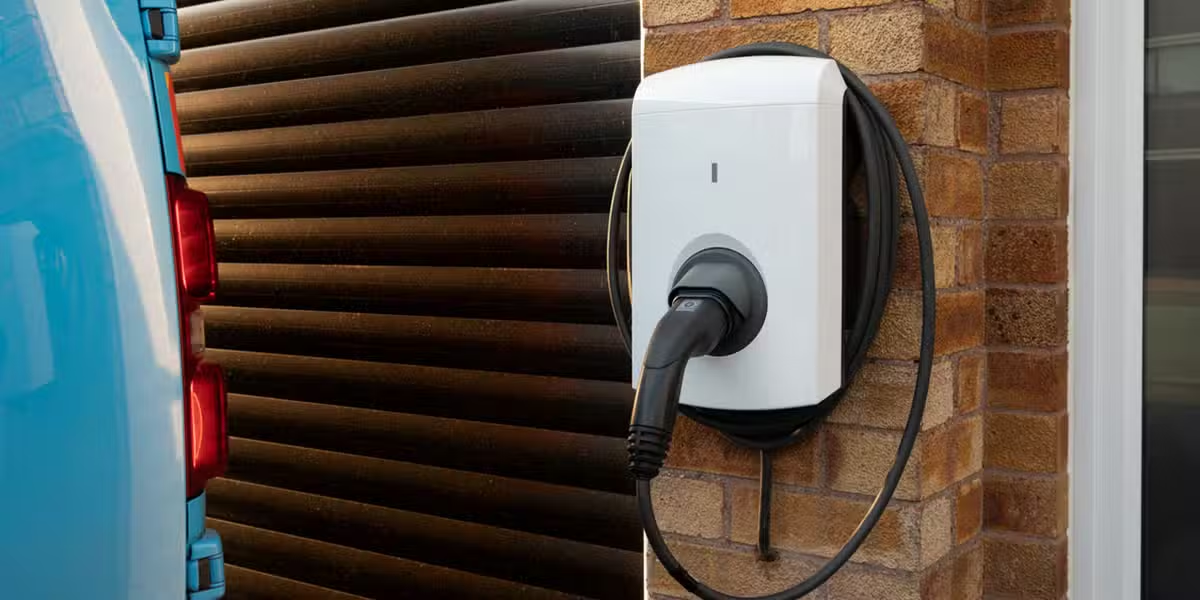
Most EV owners choose a Level 2 charger for home use. These chargers:
- Provide significantly faster charging than standard outlets
- Allow most EVs to fully recharge overnight
- Reduce reliance on public charging stations
At Expert Electric, we install Level 2 EV chargers across Vancouver, Burnaby, Richmond, Surrey, Coquitlam, North Vancouver, and West Vancouver. Every installation is designed with safety, efficiency, and long-term reliability in mind.
Maintenance Costs: One of the Biggest EV Advantages
If you’ve owned a gas car for years, you’re probably familiar with the rhythm of regular maintenance, and the surprise repairs that tend to arrive at inconvenient times.
Why EVs require less maintenance
Electric vehicles:
- Don’t need oil changes
- Don’t have exhaust systems
- Don’t require traditional transmission servicing
- Have fewer moving mechanical parts
This simplicity reduces both routine maintenance and unexpected repair costs.
Fewer parts, fewer problems
Gas engines generate heat, vibration, and friction, all of which contribute to wear over time. EV drivetrains are simpler and more durable, leading to:
- Fewer breakdowns
- Lower repair bills
- More predictable ownership costs
When comparing gas car cost to EV ownership, maintenance savings alone can be substantial over several years.
Insurance and Resale Value: The Changing EV Landscape
Insurance considerations
Insurance rates vary based on vehicle type, driver history, and location. While EV insurance was once considered expensive, that gap has narrowed significantly due to:
- Improved safety features
- Lower accident severity in some cases
- Increased familiarity among insurers
Many EV owners now pay insurance premiums comparable to similar gas vehicles.
Resale value and future demand
As fuel prices remain high and EV adoption grows:
- Demand for used EVs continues to increase
- Vehicles with low operating costs retain value better
- Buyers are increasingly cost-conscious
EVs are no longer a niche product, they’re becoming the practical choice for many drivers.

Do EVs Save Money Over Time? A Clear Answer
So, do EVs save money in BC?
For most drivers:
- Fuel costs are significantly lower
- Maintenance costs are reduced
- Long-term ownership expenses are more predictable
While individual savings vary based on driving habits and charging setup, EVs consistently outperform gas vehicles in high fuel markets like British Columbia.
Price Stability: An Overlooked Advantage of EV Ownership
One major benefit of EV ownership often goes unnoticed: cost stability.
Gas prices are unpredictable
Gas prices can change rapidly due to:
- Global supply issues
- Political events
- Seasonal demand
You may do nothing differently, yet suddenly pay far more at the pump.
Electricity prices are predictable
Electricity rates in BC are regulated and relatively stable. This predictability allows EV owners to:
- Budget more accurately
- Avoid sudden cost spikes
- Plan long-term expenses with confidence
That stability alone makes EV ownership less stressful.
A Realistic BC Driving Scenario
Imagine a daily commute from Surrey to downtown Vancouver.
With a gas vehicle:
- Regular stops at expensive fuel stations
- Rising fuel prices with no warning
- Frequent maintenance
With an EV:
- Overnight home charging
- Lower energy costs per kilometre
- Minimal maintenance
Over the course of a year, the savings can be significant. Over the lifetime of the vehicle, they can be transformative.
Why Professional Charger Installation Matters
An EV’s efficiency depends heavily on its charging setup.
Safety and performance go hand in hand
A professionally installed EV charger ensures:
- Proper electrical load calculations
- Compliance with electrical codes
- Safe, reliable operation
Improper installations can lead to inefficiency, nuisance breaker trips, or even safety hazards.
Expert Electric: trusted EV charging specialists
At Expert Electric, our licensed electricians help homeowners and businesses:
- Choose the right charger
- Upgrade electrical panels if needed
- Install safe, code-compliant charging solutions
We proudly serve residential and commercial clients across the Lower Mainland, ensuring every EV owner gets a setup that maximizes savings and performance.
EVs and Businesses: Lower Operating Costs at Scale
For businesses, the savings can be even greater.
Fleet electrification benefits
Switching company vehicles to EVs can:
- Reduce fuel expenses dramatically
- Lower maintenance downtime
- Improve budget predictability
Businesses across BC are increasingly turning to EVs as a practical cost-control strategy rather than a purely environmental one.
Frequently Asked Questions (FAQs)
Q: Do EVs save money compared to gas cars in British Columbia?
A: Yes. In British Columbia’s high fuel market, EVs typically cost less to operate due to lower charging costs, reduced maintenance, and stable electricity prices compared to gas vehicles.
Q: What is the real electric car vs gas car cost over time?
A: While some EVs have a higher upfront price, their total cost of ownership is often lower due to cheaper energy, fewer repairs, and reduced maintenance compared to gas cars.
Q: How much does EV charging cost in BC?
A: EV charging cost in BC is generally low, especially when charging at home. Electricity rates are stable, making monthly charging far more predictable than gas expenses.
Q: Is home charging cheaper than public EV charging?
A: Yes. Home charging is usually the most affordable option, allowing drivers to avoid public charging premiums and take advantage of off-peak electricity rates.
Q: Why do EVs require less maintenance than gas cars?
A: EVs have fewer moving parts, no oil changes, and no exhaust systems, which significantly reduces maintenance needs and long-term repair costs.
Final Thoughts: Are EVs Worth It in BC?
When you compare:
- Electric car vs gas car cost
- EV charging cost vs gas car cost
- Maintenance, reliability, and price stability
The conclusion is clear: EVs make strong financial sense in British Columbia’s high fuel market.
They offer real savings, fewer surprises, and a more predictable ownership experience, especially when paired with a proper home charging solution.
Ready to Save? Contact Expert Electric
If you’re thinking about making the switch to an EV, or already own one and want to optimize your charging setup, Expert Electric is here to help.
Call Us: 604-681-8338
Email Us: info@expertelectric.ca
From EV charger installations and electrical upgrades to expert guidance you can trust, we help BC drivers power their vehicles safely, efficiently, and affordably.
Because in a province where gas prices never seem to go down, driving electric just makes sense.